
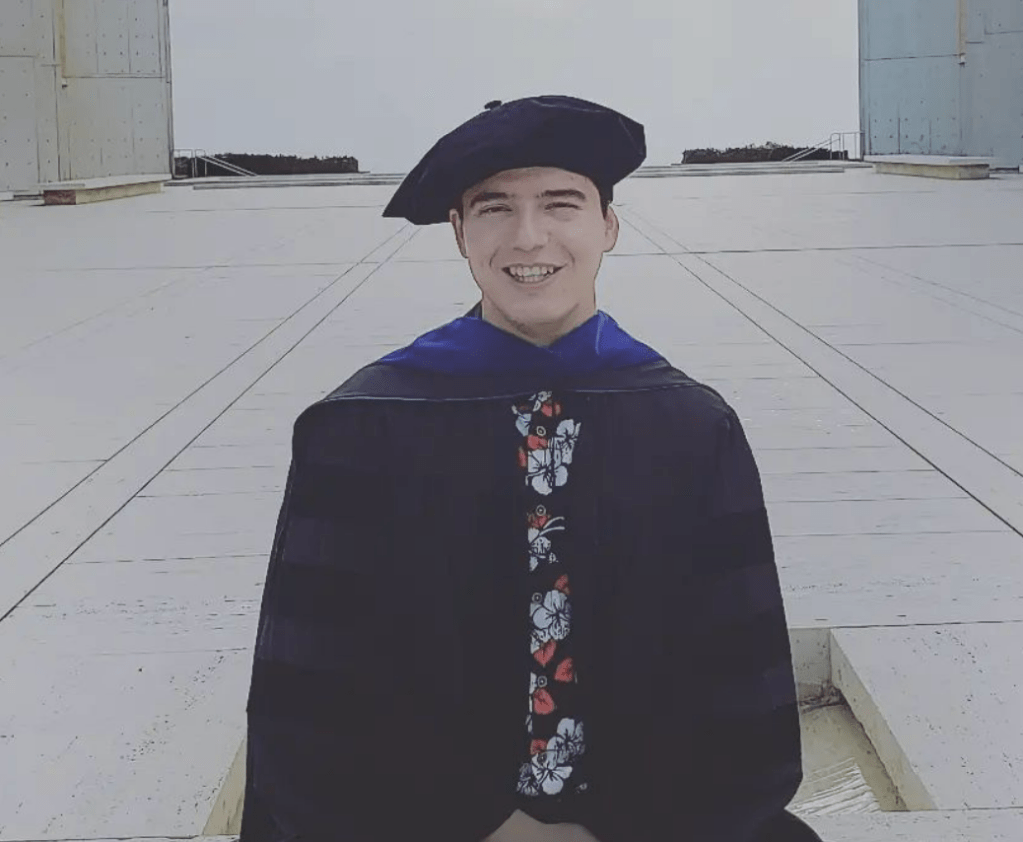



Immigrant. Neuroscientist. Skater. Gamer.
My professional background reflects a commitment towards immersing myself in interdisciplinary neuroscience research as a future faculty member, as well as a significant devotion to mentorship and community outreach in my development as a scientist. I’m an immigrant from Mexico and the first in my family to go to college, and I strongly believe that my experiences growing up with English as my second language in a US bordertown school district where over 80% of students are eligible for the Free/Reduced Lunch program has prepared me to be an empathetic mentor to low-income students and trainees that are in need of career guidance.
My enrollment in university was beyond my parents finances, and I would have attended community college had it not been for the Gates Millenium Scholarship. This full-ride scholarship set the stage for my entry to research at UC Berkeley since I did not have to work part-time to afford food and housing. As an undergraduate researcher, I was a Minority Access to Research Careers (MARC) trainee, which set a secure foundation to learn what a long-term career in research looked like. Most importantly, it gave me community, as my cohort looked like me and shared similar lived experiences. Inspired, I became a leader in the UC Berkeley Undergraduate Research Assistant Program (URAP), where I guided students towards research opportunities at my organized seminars and invited speaking opportunities with the local SACNAS chapter. With the knowledge that cohort-based, minority-focused research programs were effective for my professional development, I applied to the University of Pennsylvania’s Post Baccalaureate Research Program, where for two years I had the community and research mentorship required for someone like me to join UC San Diego (UCSD) for a Neuroscience Ph.D.
My leadership experiences at UCSD have boosted my confidence in succeeding as a research faculty. In my first year, I organized 3 other graduate students to found Colors of the Brain, an award-winning outreach organization that has since 2016 held informational events for San Diego area undergraduates interested in neuroscience research careers. As our reputation grew as a grass-roots organization, so did our membership and impact, and in 2020 we seized the opportunity to create the highest paid Summer undergraduate research program at UCSD in collaboration with the Kavli Institute for Brain and Mind. Over 3 annual cohorts, we have raised over $107,000 to fund and mentor 19 UCSD undergraduate students from minoritized backgrounds and have further organized an annual undergraduate research symposium in collaboration with UCSD STARTneuro. My graduate work was thus recognized by the Leon Thal Excellence in Neuroscience award, the highest recognition awarded by the UCSD Neuroscience Graduate Program. I attribute my success in continuing to balance my outreach work with research thanks in great part to my NINDS DSPAN graduate research award, which provided pivotal financial support for my transition into postdoctoral research.
During my first year as an SD IRACDA postdoctoral fellow at the Salk Institute in 2022, I founded BrainBorders, a grant-funded outreach organization that takes neuroscience education materials and career guidance to my rural hometown’s high school. My sense of belonging in neuroscience as a researcher and leader was further cemented by my selection as an NINDS BRAINS fellow, the NIH Outstanding Scholars in Neuroscience Award, and a KIBM Innovative Research Grant. As a teacher for diverse audiences, I’ve co-instructed Biol 527 (Animal Behavior) at San Diego State University and was a teaching assistant for Neuroanatomy both at the UCSD medical school (MBB1) and the neuroscience graduate program (NEU257).
In 2023, I decided to pivot my research from mouse models to humans to have a more direct, translational role in understanding this condition. Therefore, I joined Dr. Bradley Voytek’s lab at UCSD due to his expertise in analytical tools for investigating how brain regions communicate with one another during healthy and abnormal neurodevelopment using human in vivo and in vitro model systems. My long-term mentorship goal is to continue to guide historically excluded and minoritized researchers through the hidden curriculum of academia and neuroscience research with my long-term goal of directing programs like IRACDA.
 Spiked